

Contract Management Software Built for Today
Сollaborative and intelligent contract management solution. Parley Pro is built for you, the modern business. Everything you need to manage your entire contracting process with ease, and nothing you don't.


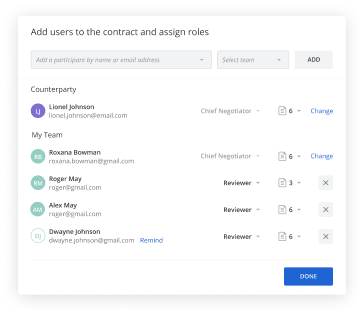
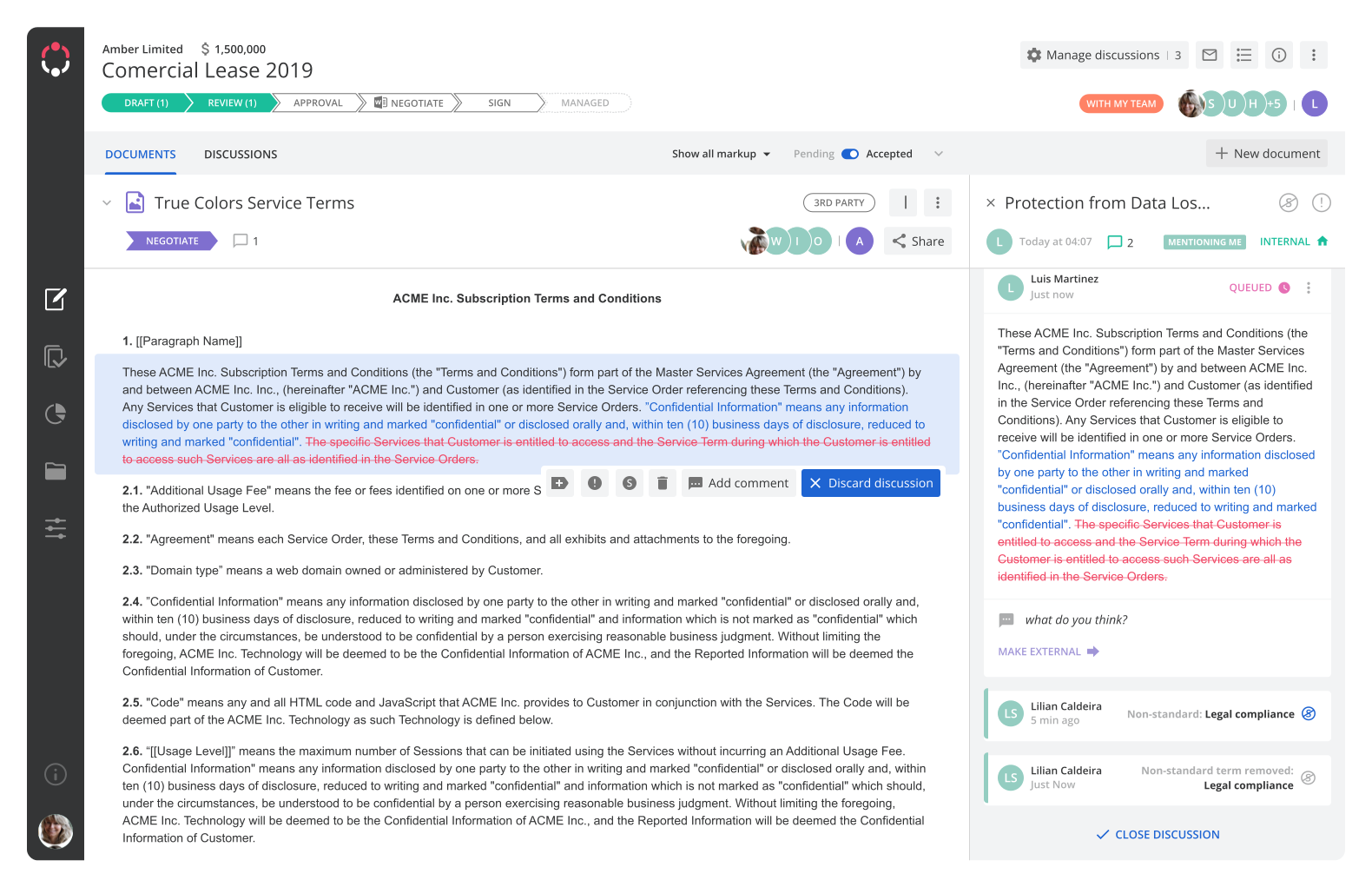
PARLEYPRO PLATFORM REDESIGN
OVERVIEW
ParleyPro system provide a modern contract process that combines smart collaboration, automation, and insights to provide a better experience for everyone.
The goal of this particular project was to identify any usability issues with the released version and determine the critical features to prioritise for the next iteration of the product.
The goal of this particular project was to identify any usability issues with the released version and determine the critical features to prioritise for the next iteration of the product.
ROLE
Product Designer
User Research, Interaction, Visual design, Prototyping & Testing
October 2018 - 2021
October 2018 - 2021
BACKGROUND
ParleyPro system provide a modern contract process that combines smart collaboration, automation, and insights to provide a better experience for everyone.
I AM HALF THE DESIGN TEAM AT PARLEYPRO
I joined Parleypro as a product designer a two with half years ago as one of 2 designers in a company of over 30 engineers and 5 product managers. I support design across every aspect of our business and am responsible for leading UX and UI across key parts of the application side of the platform.
I've grown tremendously in the last 2,5 years, some key achievements of which I have listed below:
I've grown tremendously in the last 2,5 years, some key achievements of which I have listed below:
Implemented a design process. This has helped our team establish more structure to how we conduct our work and allow other teams to gain visibility across our upcoming sprints.
Improved usability across the platform. Despite the fact that many solutions on parleypro are unique and require a non-standard approach, we nevertheless tried to create a user-friendly interface and provide end users with easy interaction and immersion into the system
Establishing a design kit. This has helped to maintain consistency in the look and feel across different parts of the platform.
Establishing a design system. This has helped the Engineering and Product teams to understand how and why we choose to implement certain components over others.
Improved usability across the platform. Despite the fact that many solutions on parleypro are unique and require a non-standard approach, we nevertheless tried to create a user-friendly interface and provide end users with easy interaction and immersion into the system
Establishing a design kit. This has helped to maintain consistency in the look and feel across different parts of the platform.
Establishing a design system. This has helped the Engineering and Product teams to understand how and why we choose to implement certain components over others.
•
•
•
•
THE PROCESS
Our process in Parley Pro is based on the double diamond theory adapted to our realities.
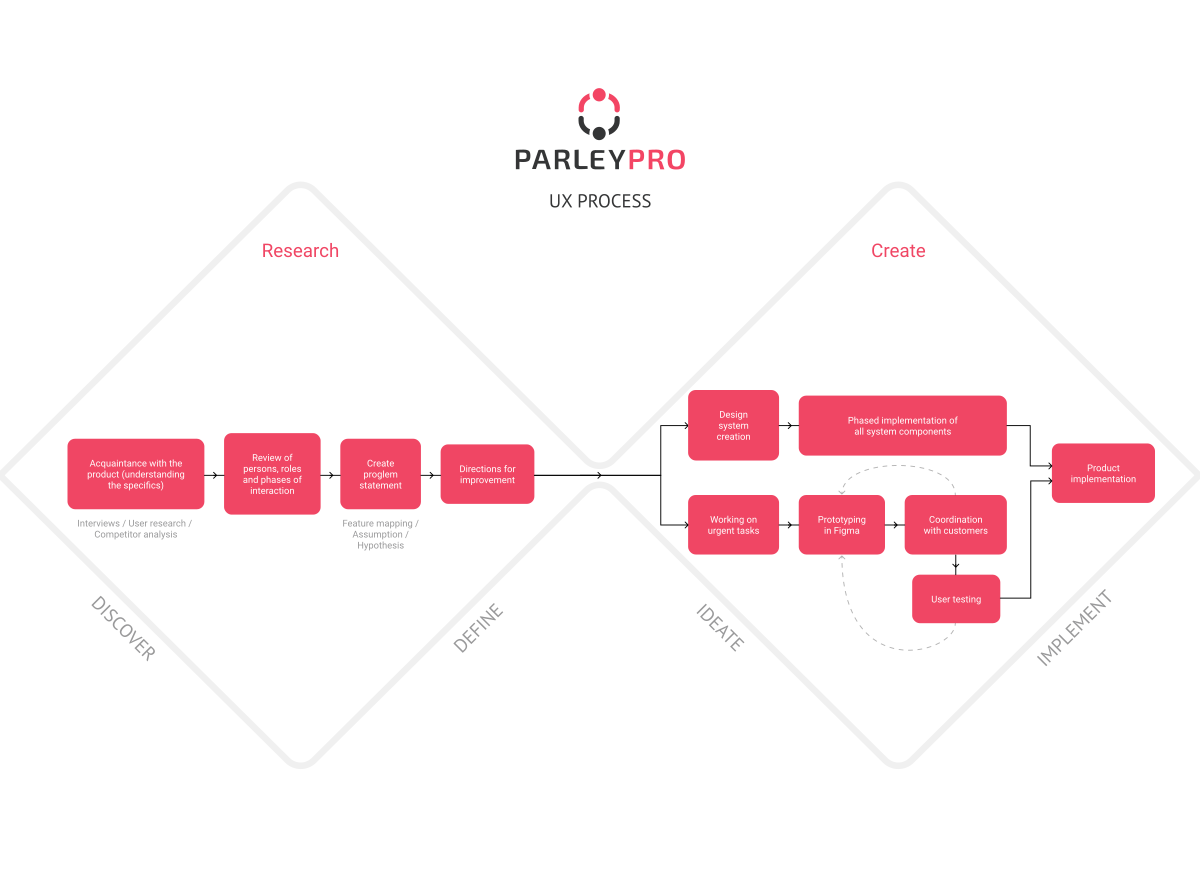
We started our work by getting to know the system, reviewing competitors and understanding the audience of users working with the system (in order to better understand the features that should be paid attention to when creating a user interface).
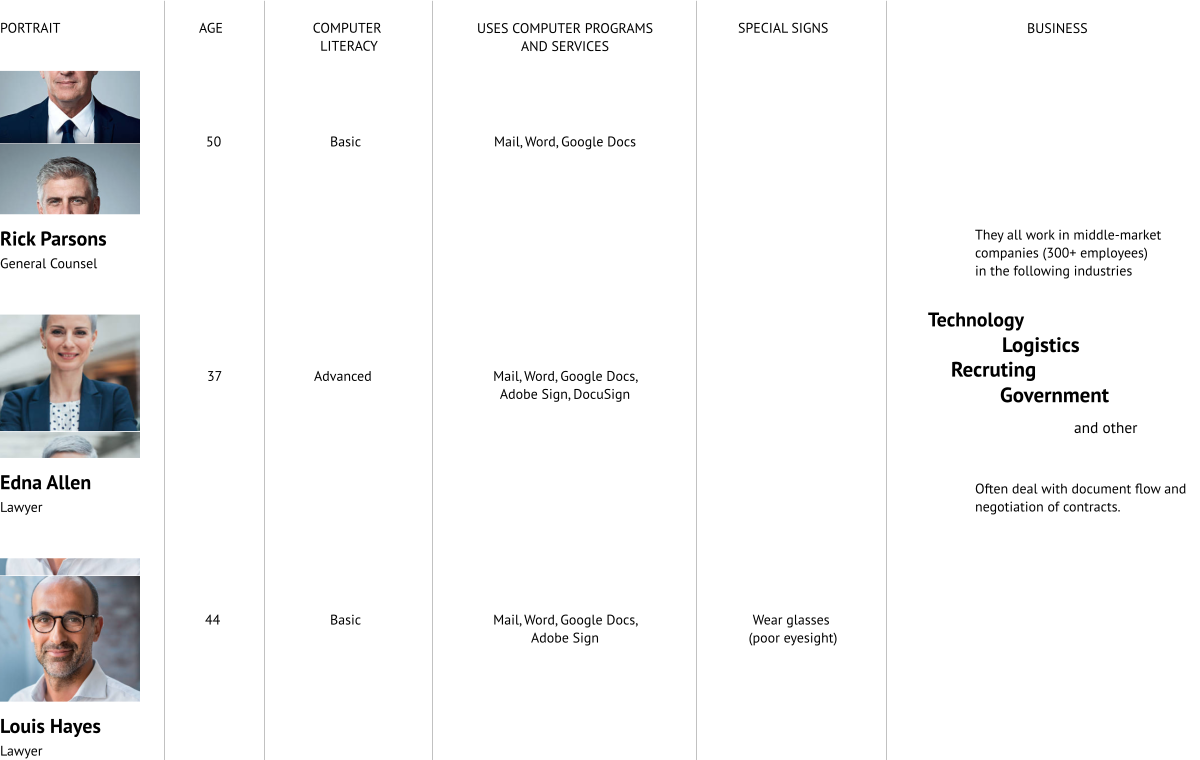
PERSONAS
* names are not real
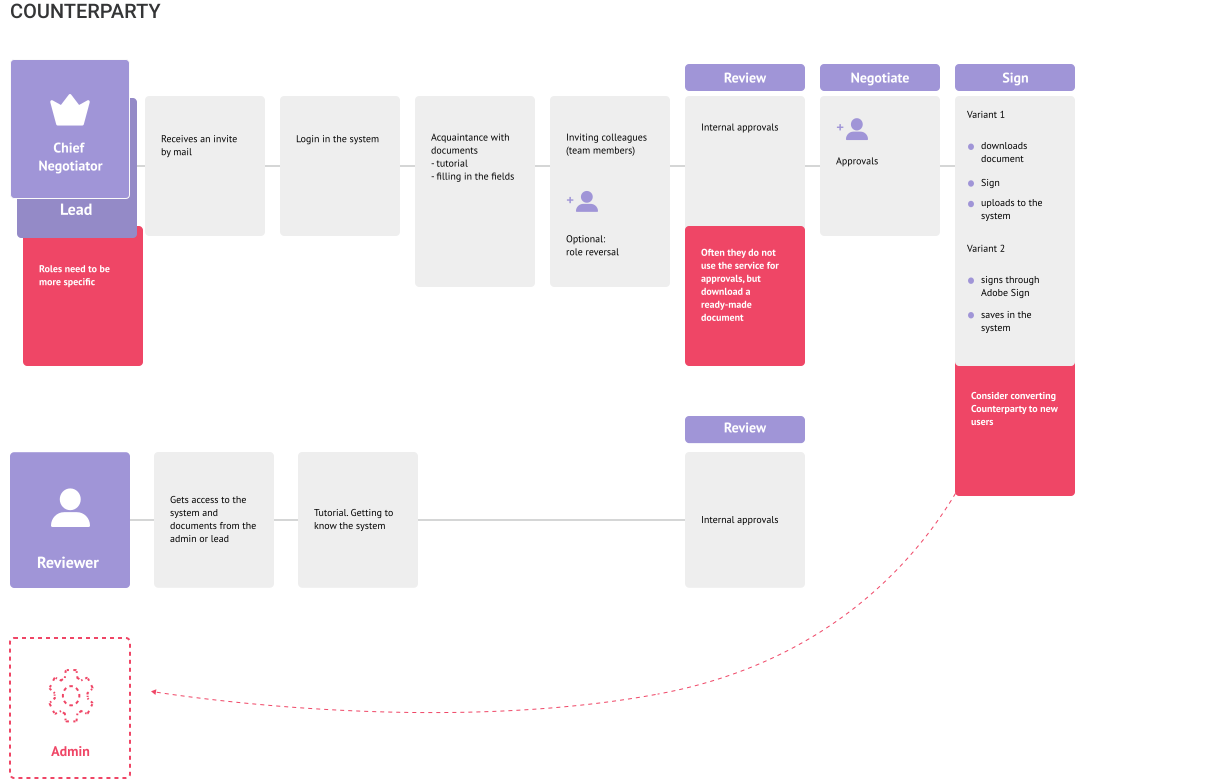
EXISTING ROLES AND PHASES

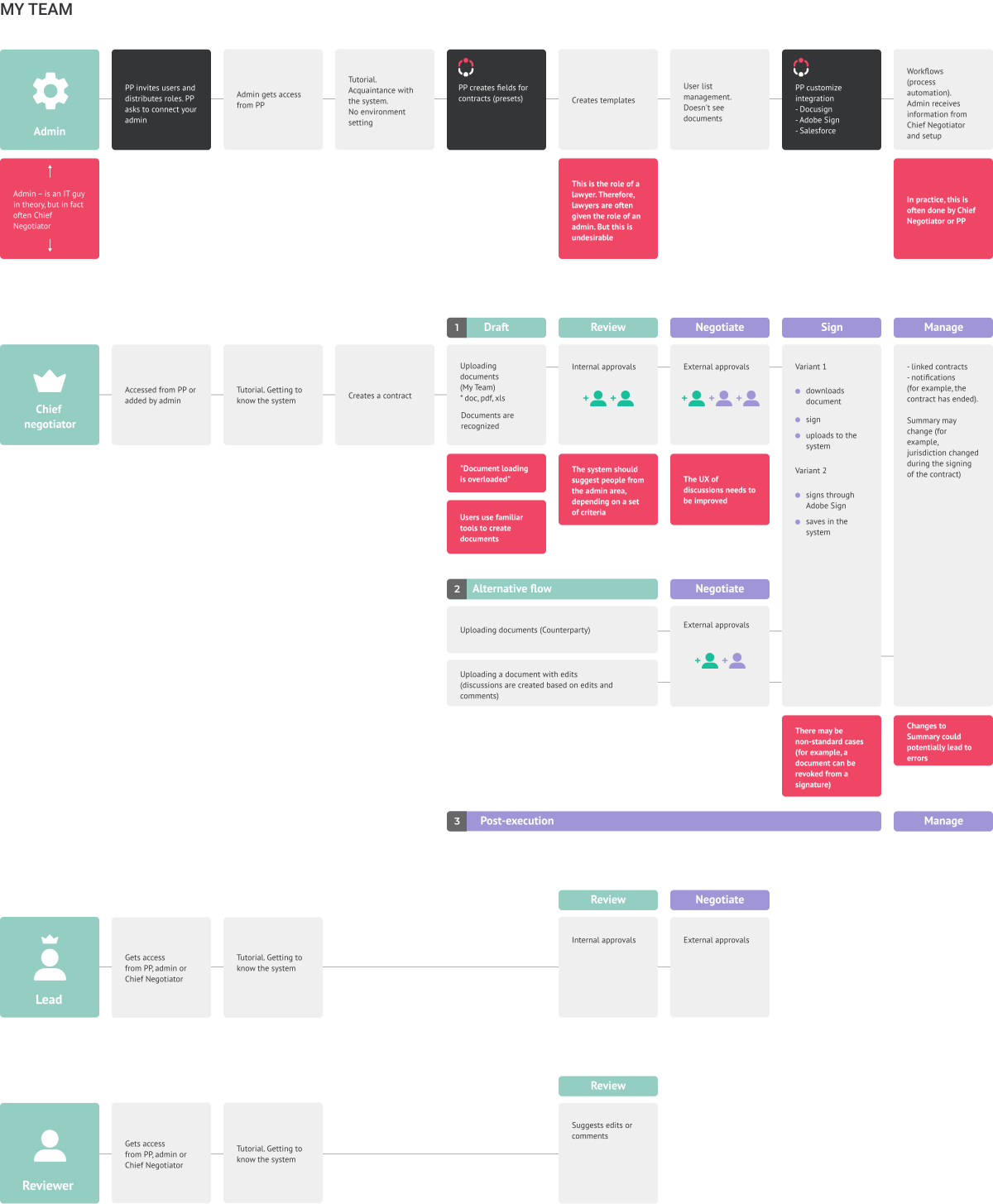
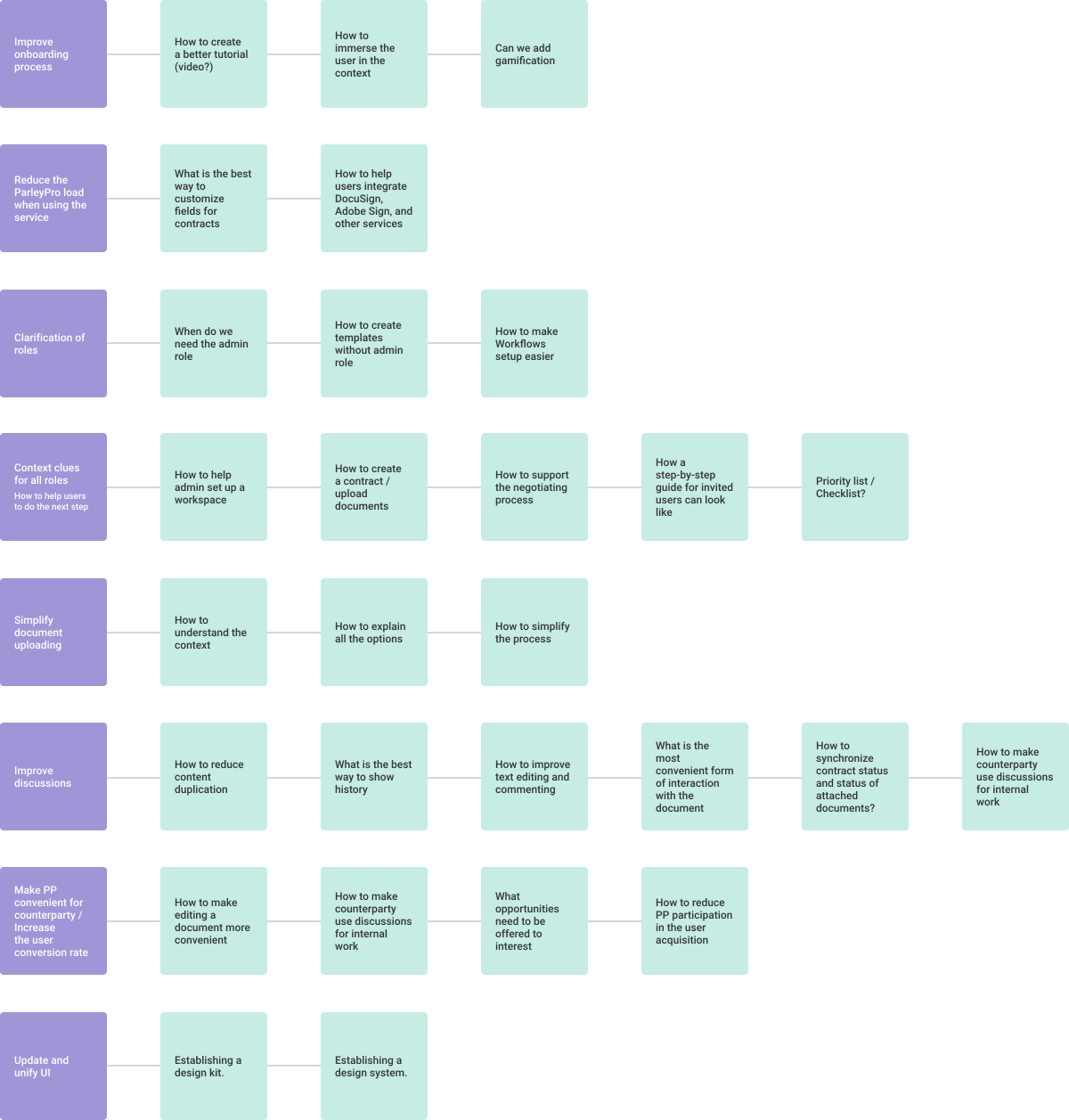
DIRECTIONS FOR IMPROVEMENT
We've find alot of issues, all was discussed with the project owners and decided what needs to be donne first. Since this is a living product, first of all it was decided to eliminate the most problematic areas, simultaneously solving business problems that cover urgent needs.
THEN WE HAD STARTED
We were faced with the fact that the entire design project was made in different programs (some of the files were in the sketch and invision, and some of the files were in Photoshop). We decided that (still damp at the time) Figma would solve and cover all our needs in the design and reorganization of the design of the system much more elegantly. And we moved to it, but we had to spend some time on it, but after a week from the beginning of the move, we could already design new solutions and solve problems using Figma. Figma combines two basic functionalities that we need so much (this is design and creation of interaction prototypes)
THE CREATION OF DESIGN SYSTEM

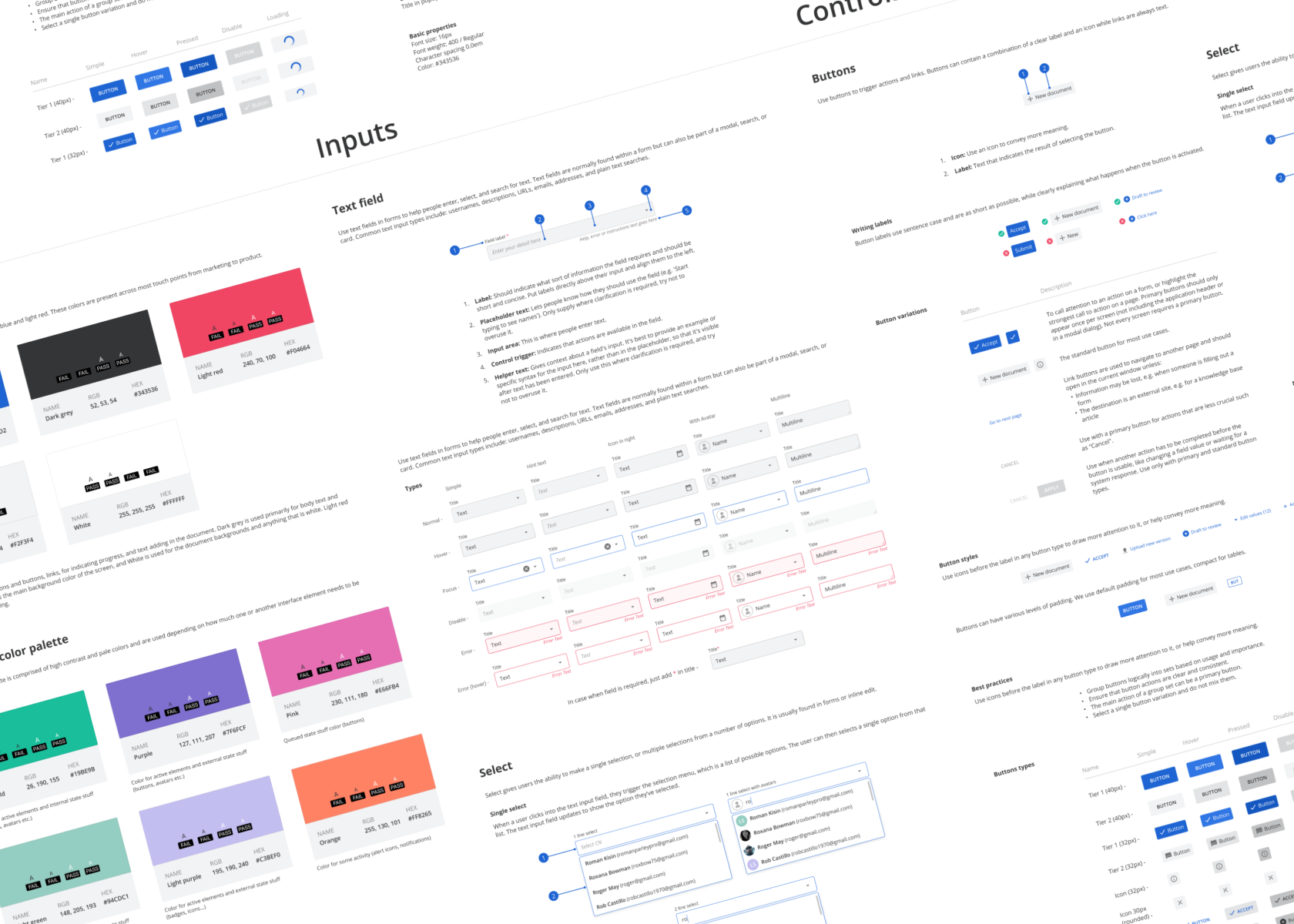
...at the moment when the design system began to take on its finished form, we began to work on urgent tasks.
WORK ON THE PRODUCT
At the same time with all the improvements of the design system and process, we had to solve pressing problems. On the example of one, I want to show what kind of tasks we are solved.
Description from customer:
*Task screenshot from Jira
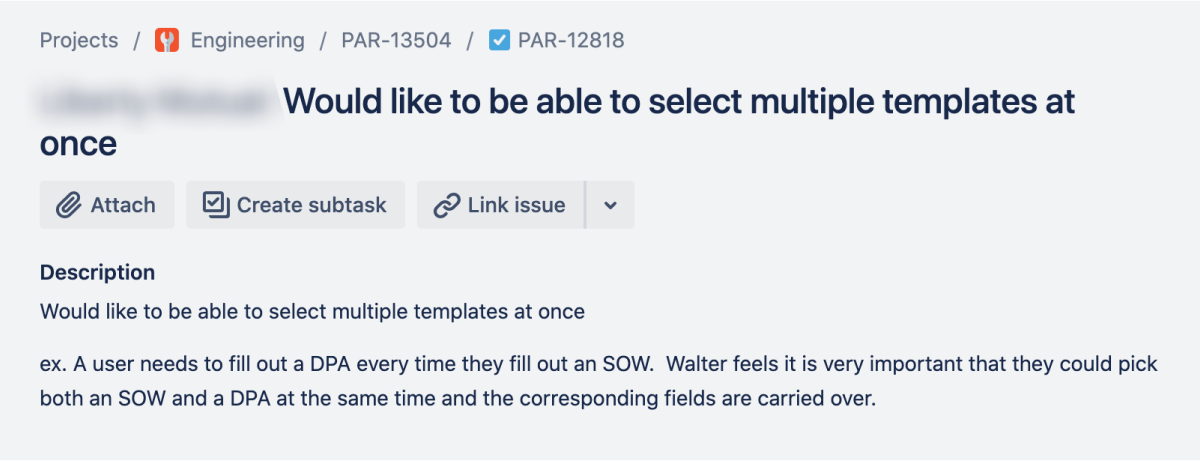
First, we tried to find out all the requirements from end users (about how they see this functionality and what kind of tasks it should solve ... I would like to say once again that this product is mostly focused on lawyers).
WHAT WE FOUND OUT
When creating almost every new contract in Parleypro, basic templates with corresponding fields are used (as a rule, these are standard sets of documents that are added depending on the purpose of the contract).
Chief Negotiators wanted to create bundles with a set of such templates so that they would not be added one by one each time. Also, one of the conditions was to be able to assign specific users or user groups to each of the templates (users would be automatically added to the contract depending on the stage of work with the document for approval).
Chief Negotiators wanted to create bundles with a set of such templates so that they would not be added one by one each time. Also, one of the conditions was to be able to assign specific users or user groups to each of the templates (users would be automatically added to the contract depending on the stage of work with the document for approval).
We consolidate all the requirements and draw up a list of key points for creating this functionality
MAIN FUNCTIONALITY:
Add functionality for creating new bundles (entry point + module for creating and configuring bundles)
Somewhere to have a list of already created bundles (with the ability to manage them)
Somewhere to have a list of already created bundles (with the ability to manage them)
•
•
•
Bundle creation module:
Set a name for a new bundle
Generate a list of templates in the bundle
Ability to set the order of adding templates to the contract
Assign approvers for each template
Fill in meta data for the bundle
Ability to turn off bundles from the list of possible for use without deleting it
Generate a list of templates in the bundle
Ability to set the order of adding templates to the contract
Assign approvers for each template
Fill in meta data for the bundle
Ability to turn off bundles from the list of possible for use without deleting it
•
• •
•
•
•
• •
•
•
•
Legacy
Appearance of the existing template functionality
Create a new template
Storing a list of created templates
Managing created templates
Storing a list of created templates
Managing created templates
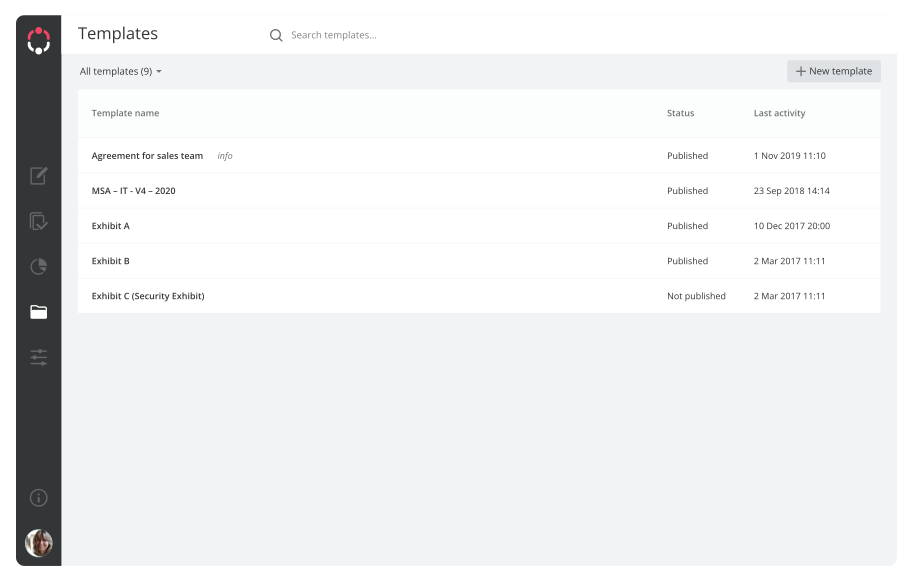
Existing list of published templates when added to a contract
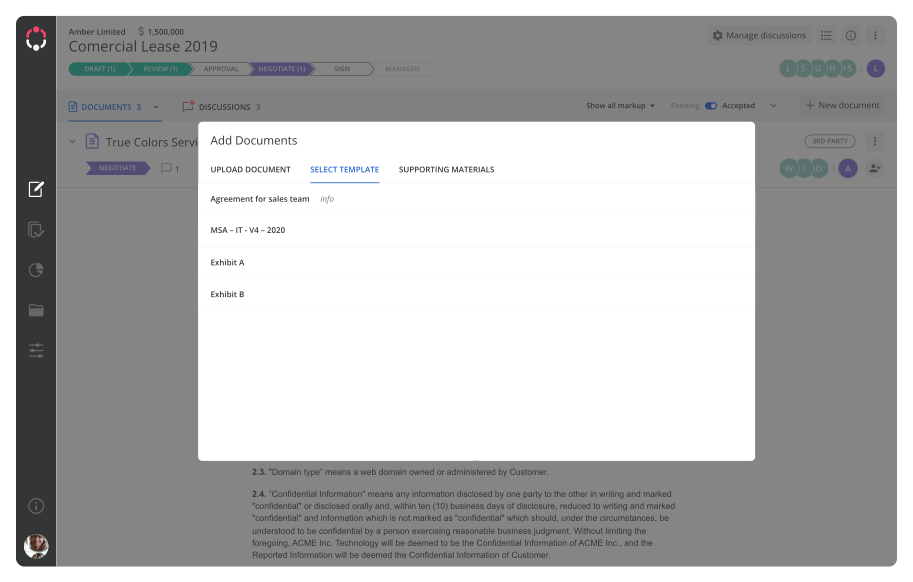
Redesign (page with templates)
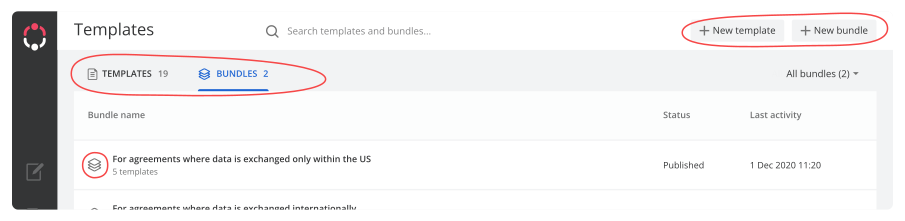
Since bundles are essentially grouped templates, it made sense to place them on the same page (however, I didn't want to mix everything up).
In summary:
Tabs with templates and bundles
- Split the templates page into 2 lists
Moved the functionality for creating new templates and bundles to a level above the tabs and allowed creating new templates and bundles from any of these tabs
- Reorganized the layout of elements on the page
Since the lists on these tabs looked very similar, it was decided to use icons to differentiate them more (they were added directly to the tabs and lists)
- Visually separated the entities of templates and bundles
Templates page
Separate template

Templates bundle

Designing functionality to create a bundle
Since all the design system components were already ready, no drawings were required and it was faster to design everything on them. All that was left was to design all the functionality that this module was supposed to have.
- Bundle name
- Formation of a list of templates in a package
- Ability to set the order of adding templates to a contract
- Assign approvers (responsible persons) for each template
- Fill in metadata for the package
- Ability to turn off packages from the list of possible ones for use without deleting them
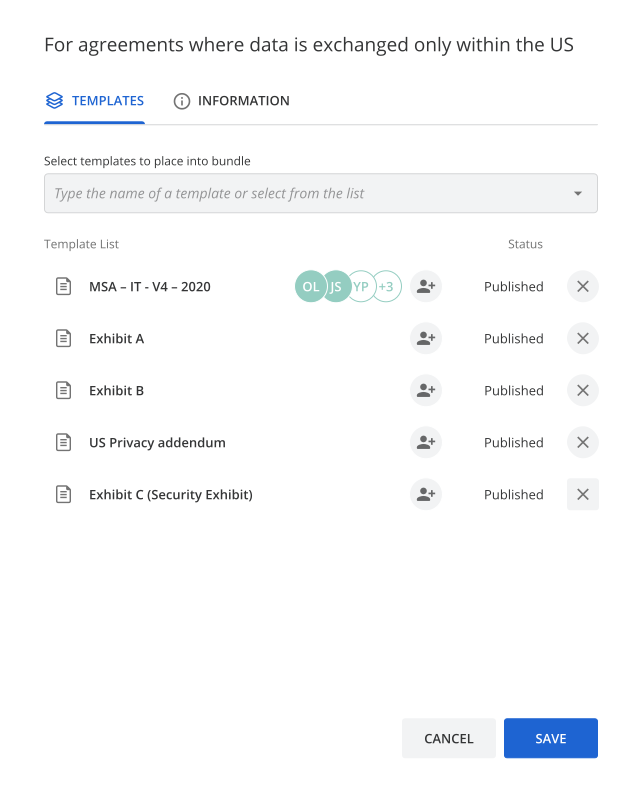
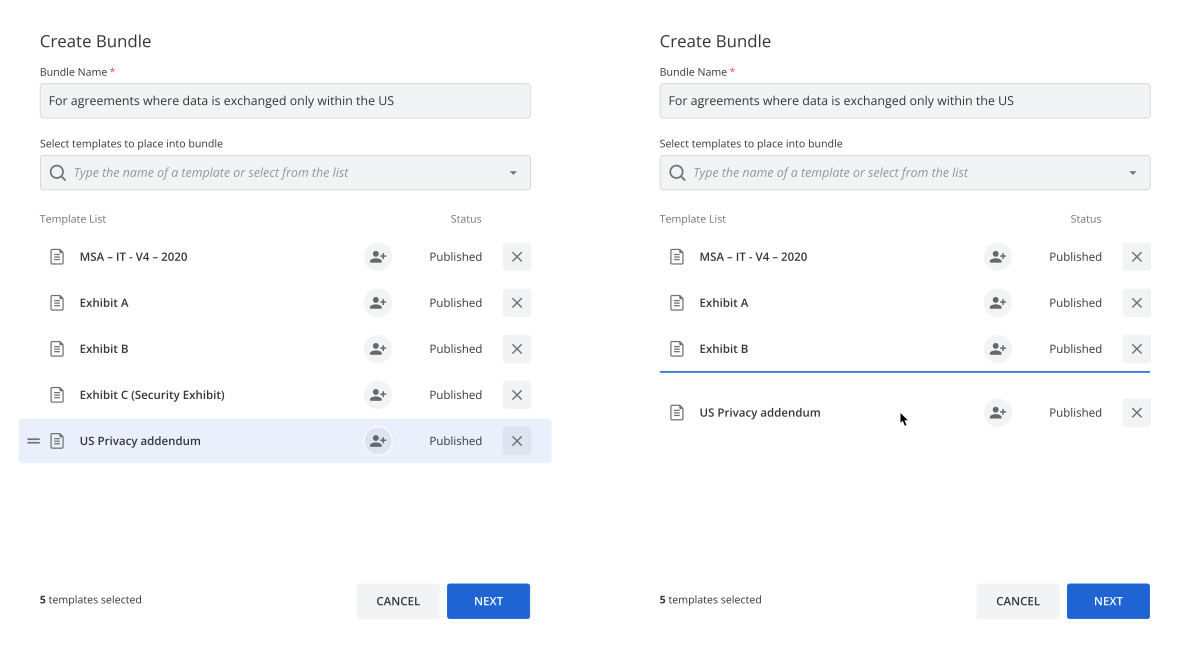
Initializing package creation: assigning a package name and selecting a template
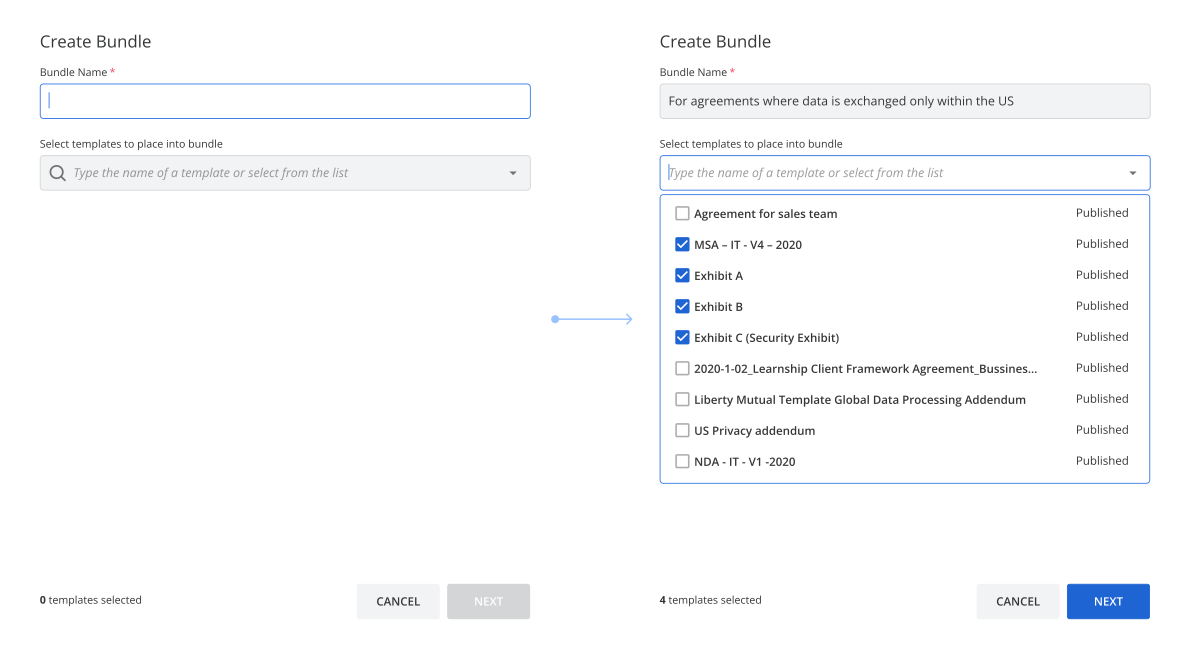
Ability to customize the order of adding templates to the contract
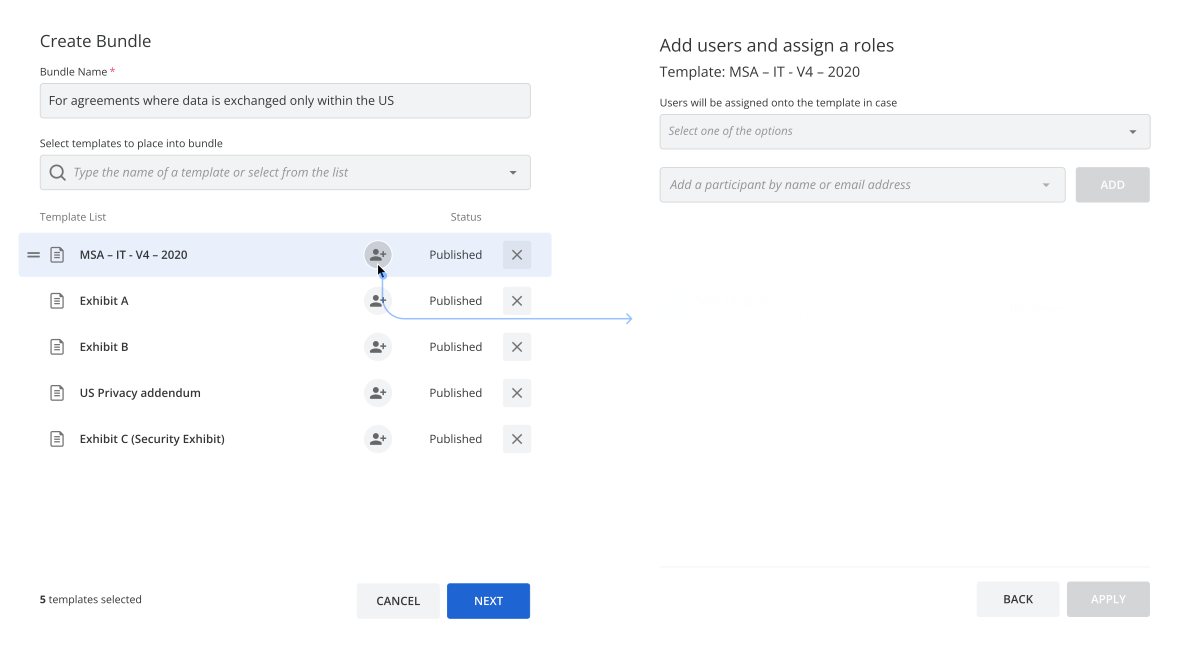
Adding approvers to the template
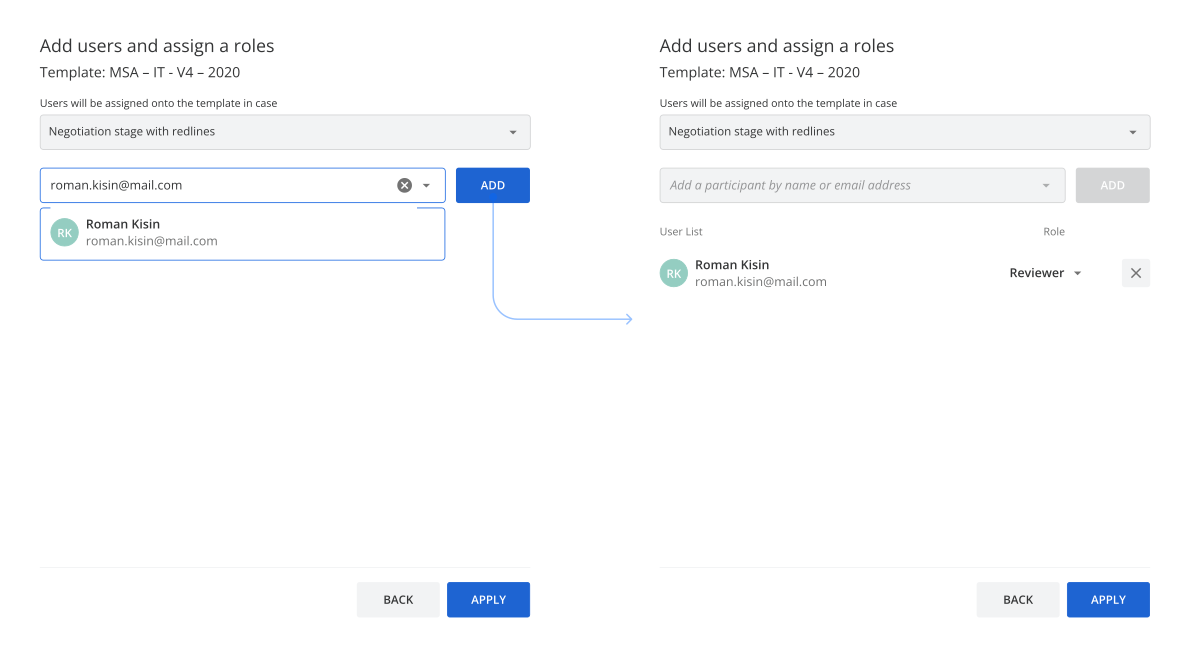
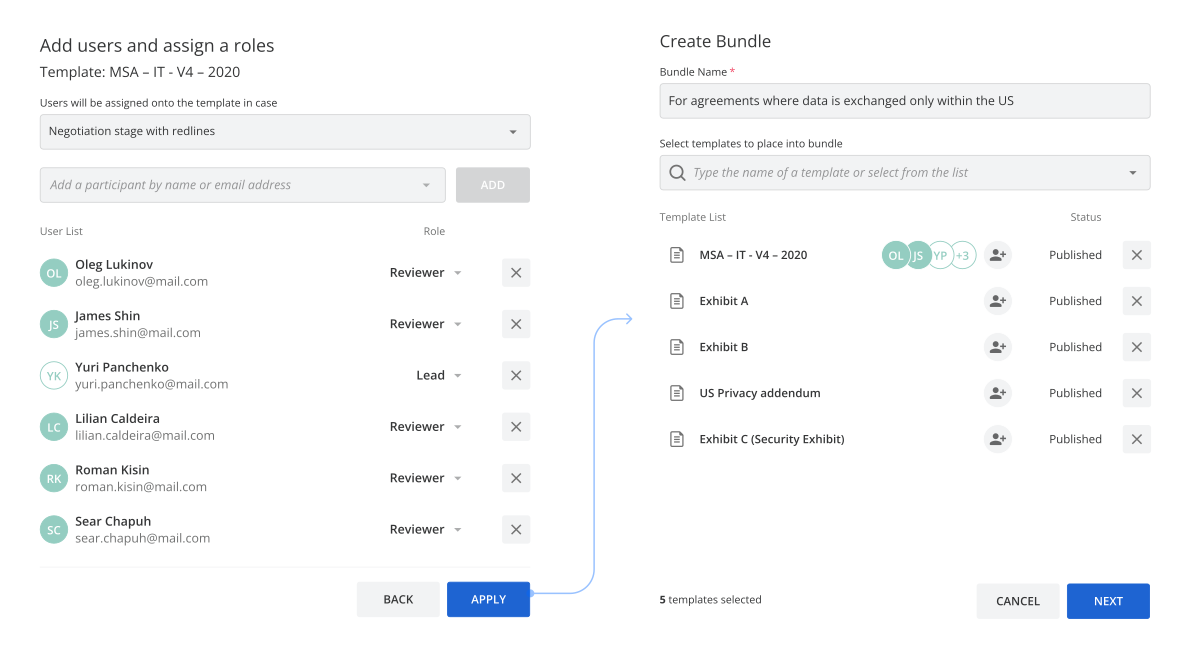
Final step: filling in the metadata
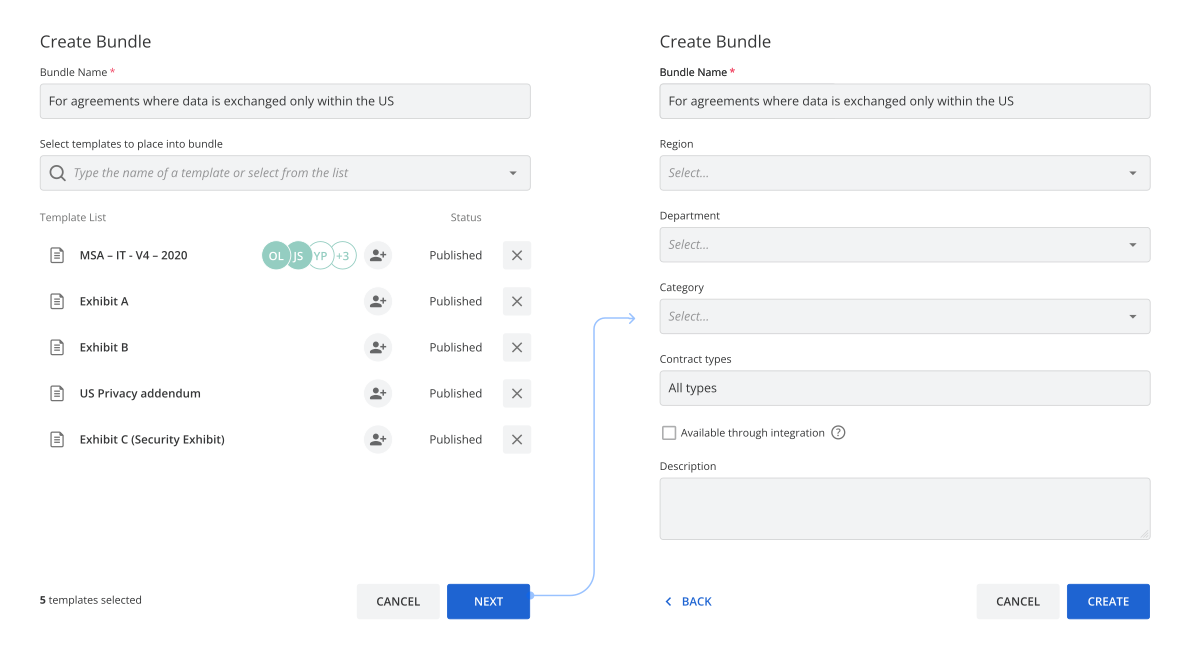
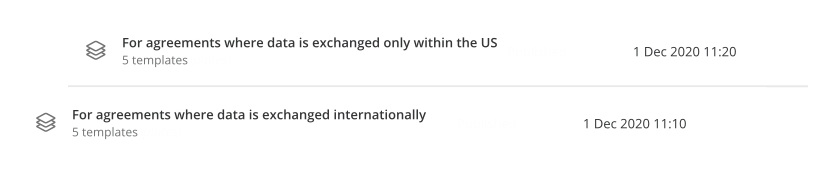
Visualization of functionality on the templates page
Once a package is created, you need to be able to manage it, but this looks a little different.
Redesign of functionality adding a template to the contract
The process of adding templates has already been implemented in the system, all that remains is to add bundles. Since template bundles and templates themselves are essentially one entity, it was decided not to create additional locations for the list of bundles and to combine it with templates into one list (but slightly separating them visually).
- Adding Pattern Search
Since there can be many templates, to speed up the search for what you need, a search by templates was added (in fact, it works as a filtering of the list by the value entered in the search bar)
The previously added icons come to the rescue (they make it easy to figure out what exactly you are adding, a set or a single template)
- Visual differentiation of entities template and bundle templates
- Adding bundles to the list of templates
In this case, there is no point in separating simple templates and template bundles (since in this dialog only selection and loading into the contract occurs)
List of changes:
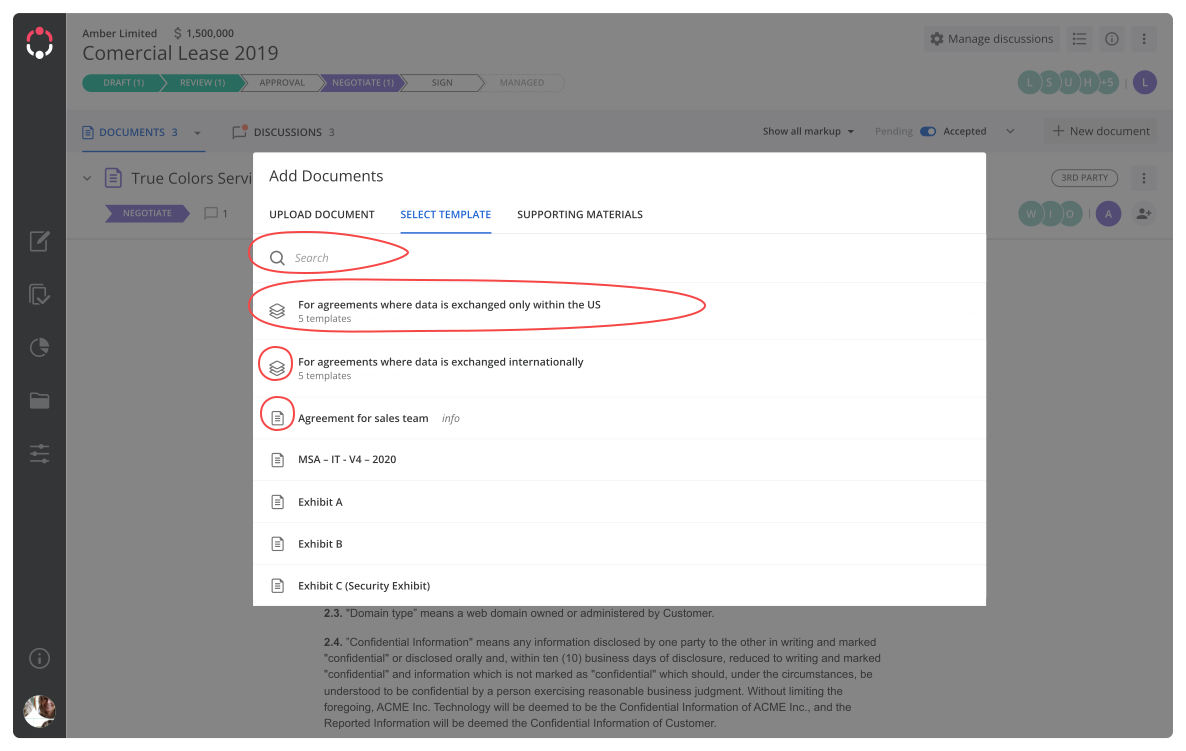
Visualization of functionality adding a template to a contract
CONCLUSION
End-users were looking forward to the implementation of this feature And now after the implementation of this small feature, the process of creating and filling a contract with basic templates has become much easier.
In fact, during the time of cooperation with ParleyPro, many interesting problems were solved, I described only one of the latter (since it was the easiest to remember). The product is really not simple, but at the same time very interesting and promising. I am very glad that I had the opportunity to be part of the team and help improve this product.
In fact, during the time of cooperation with ParleyPro, many interesting problems were solved, I described only one of the latter (since it was the easiest to remember). The product is really not simple, but at the same time very interesting and promising. I am very glad that I had the opportunity to be part of the team and help improve this product.
TESTIMONIAL
Working with Dmitry was very productive and pleasant, he was always intouch and in the shortest possible time solved the tasks assigned to him. During our cooperation, he showed itself as a very executive and responsible specialist.
Lilian Caldeira, CEO of ParleyPro


